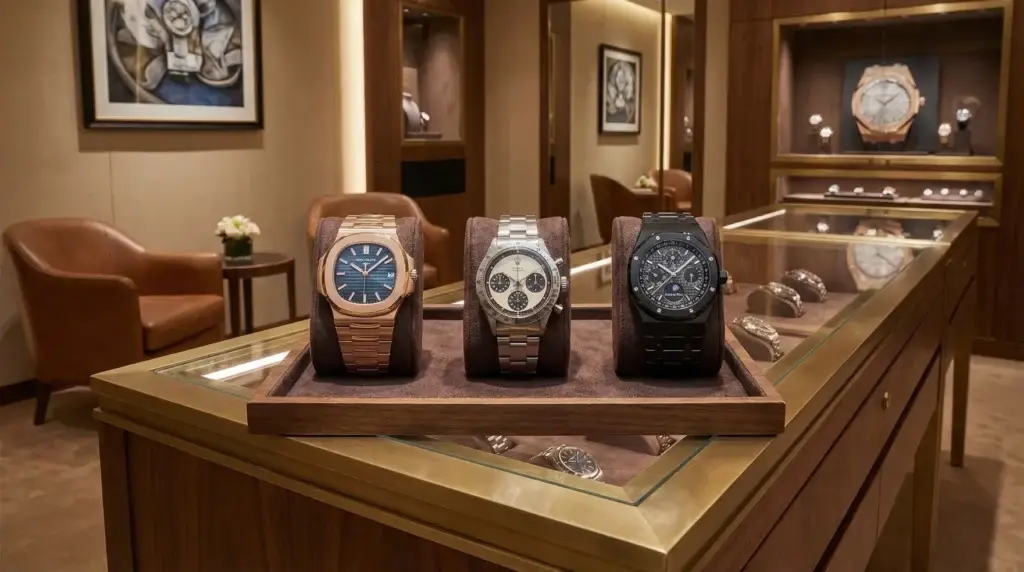
From humble mountain workshops to global icons of prestige, discover the rich heritage behind the world’s most celebrated watchmaking houses.
When you glance at the watch on your wrist, you are looking at far more than a simple timekeeping device. You are looking at centuries of human ingenuity, artistic vision, and technical mastery. You are looking at a tradition that has survived wars, economic crises, and technological revolutions. You are looking at Switzerland.
The story of Swiss luxury watchmaking is inseparable from the story of Switzerland itself—a nation whose rugged mountains, long winters, and industrious spirit created the perfect conditions for an industry that would come to define precision, quality, and prestige around the world. From the clock towers of medieval towns to the moon’s surface, Swiss watches have marked humanity’s most significant moments.
This article traces the fascinating history of Swiss luxury watchmaking, exploring how a handful of visionary founders and their descendants built brands that have become synonymous with excellence itself. Whether you admire the understated elegance of Patek Philippe, the rugged reliability of Rolex, the bold innovation of Audemars Piguet, or the accessible precision of Omega, understanding their origins deepens appreciation for every tick.
-
Men
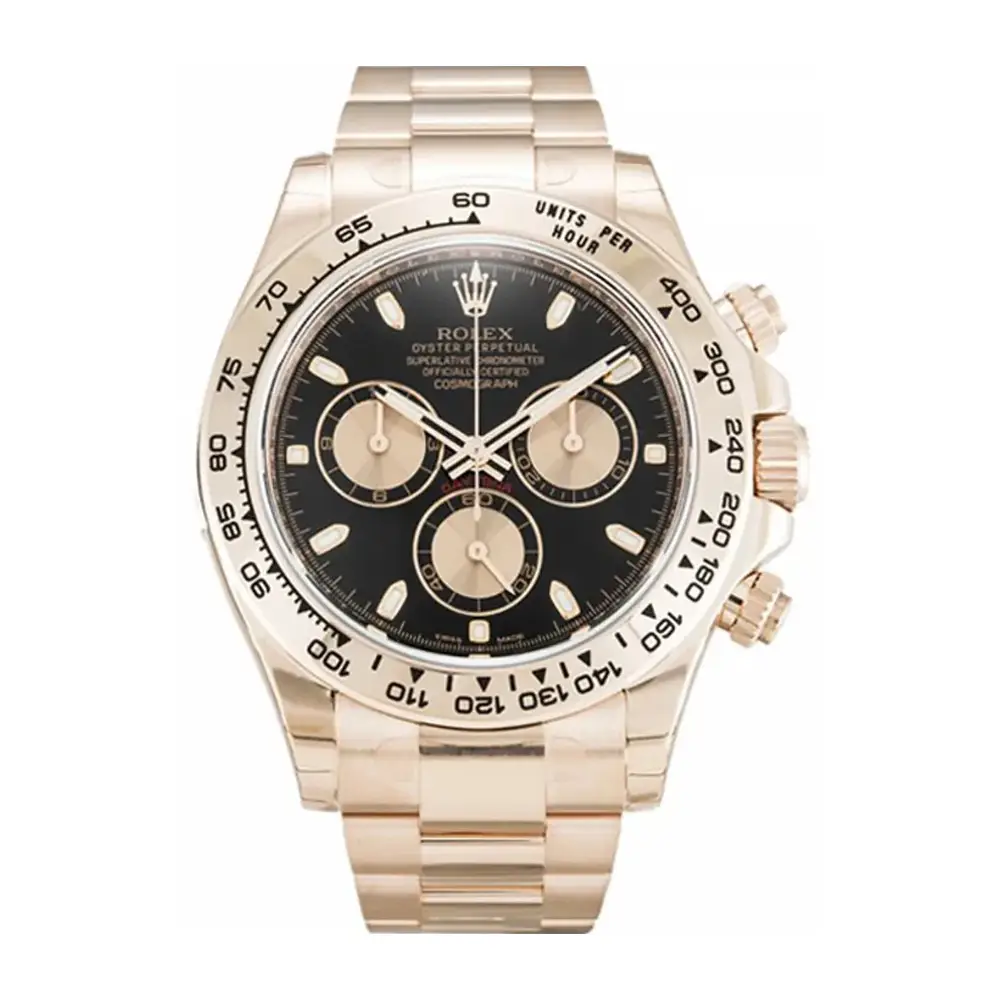
Daytona Gold Black Dial
Original price was: $354.88.$180.79Current price is: $180.79. Add to cart -
Men
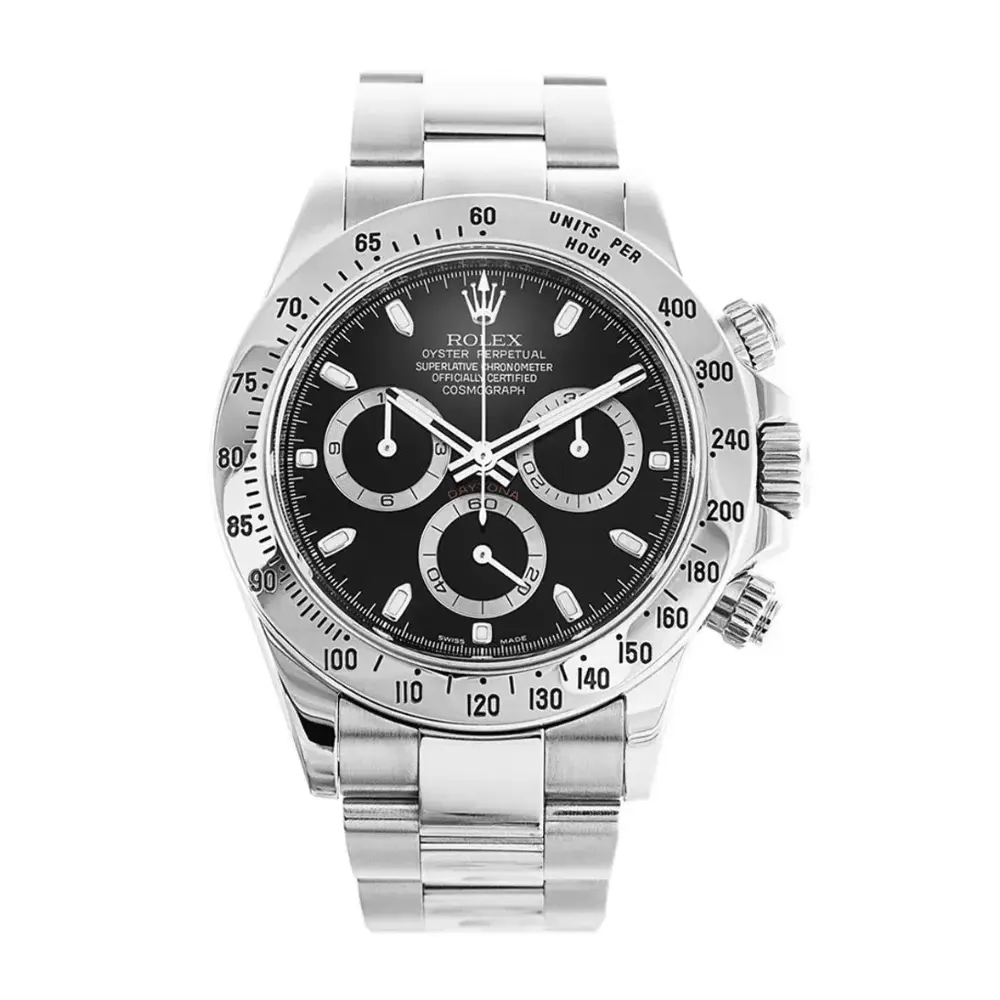
Daytona Stainless Steel, Black Dial
Original price was: $354.88.$180.79Current price is: $180.79. Add to cart -
Men
Rolex Datejust 41 “Mint”
Original price was: $354.88.$180.79Current price is: $180.79. Add to cart


The Birth of an Industry: Switzerland’s Horological Foundations
The story begins not in gleaming modern factories, but in the modest workshops of craftsmen working by candlelight during long winter months.
Early Origins in the Jura Arc
Watchmaking took root in Switzerland during the sixteenth century, when religious persecution drove skilled Huguenot craftsmen from France to seek refuge in Geneva. These artisans brought with them expertise in watchmaking and goldsmithing, establishing the foundation for what would become a national industry.
The challenging geography of the Jura Arc region proved surprisingly suitable for horological development. Farmers in isolated mountain villages needed winter work when snow made agriculture impossible. Watchmaking required relatively few tools and could be learned and practiced in small workshops without extensive infrastructure. The existing network of iron production, lacemaking, and textiles provided complementary skills and established trading routes that would prove valuable for distributing finished timepieces.
By the seventeenth and eighteenth centuries, distinct watchmaking centers had emerged throughout Switzerland. The Vallée de Joux specialized in producing complicated pocket watches requiring exceptional skill. La Chaux-de-Fonds became the leading manufacturer of Neuchâtel clocks and developed a reputation for precision timekeeping. Geneva established itself as the center for finishing and sales, where wealthy clients could commission custom pieces. Meanwhile, the production of mechanical movements spread throughout the Jura mountains, creating a decentralized network of specialized craftsmen.
The Oldest Names Emerge
Among the earliest brands still recognized today, Blancpain claims the title of oldest watch brand, having been founded in 1735 when Jehan-Jacques Blancpain registered as a watchmaker in the village of Villeret. For more than two centuries, the family continued their craft through successive generations, with each master passing knowledge to the next.
Favre-Leuba follows closely, established in 1737 when Abraham Favre registered as a watchmaker in Le Locle. For nearly two hundred and fifty years, the Favre-Leuba family continued their watchmaking tradition before changing circumstances in the late twentieth century required adaptation.
These early enterprises operated very differently from modern corporations. They were family affairs—master watchmakers working with small teams of apprentices, producing handmade timepieces for wealthy clients across Europe. Each watch was unique, crafted to order, and represented weeks or months of skilled labor. The concept of mass production or standardized models lay far in the future.
-
Audemars Piguet
Audemars Piguet Offshore Chronograph Rose Gold
Original price was: $354.88.$180.79Current price is: $180.79. Add to cart -
Audemars Piguet
Audemars Piguet Royal Oak “The Jumbo”
Original price was: $354.88.$180.79Current price is: $180.79. Add to cart -
Audemars Piguet
Audemars Piguet Royal Oak Chronograph
Original price was: $354.88.$180.79Current price is: $180.79. Add to cart -
Audemars Piguet
Audemars Piguet Royal Oak Chronograph
Original price was: $354.88.$180.79Current price is: $180.79. Add to cart


The Pioneers: Founders Who Defined an Industry
As the nineteenth century unfolded, visionary individuals began transforming Swiss watchmaking from scattered workshops into organized enterprises with international reach.
Louis Brandt and the Birth of Omega
In 1848, a young man named Louis Brandt opened a modest watch assembly workshop in La Chaux-de-Fonds. He purchased components from local craftsmen, assembled them into complete watches, and sold them across Europe through an expanding network of agents and representatives. This small operation would eventually grow into one of the world’s most recognizable watch brands.
When Louis passed away, his two sons, Louis-Paul and César, took over the family business and made a crucial decision that would shape its future. In 1880, they moved production to Bienne and established Louis Brandt & Fils, embracing mechanized production methods that would allow them to scale beyond traditional handcrafting limitations. This move positioned them to meet growing demand while maintaining quality standards.
The pivotal moment came in 1894 when the brothers developed a revolutionary nineteen-line movement that could be mass-produced with fully interchangeable parts. They named this movement “Omega”—the last letter of the Greek alphabet, symbolizing ultimate achievement and completion. So successful was this caliber that the company soon renamed itself entirely, becoming Omega Watch Company to honor this breakthrough.
By 1900, Omega had received the highest award at the Paris World Exhibition, establishing its reputation for precision and quality on the international stage. The company’s movements consistently performed exceptionally in observatory competitions, earning respect throughout the horological world.
Hans Wilsdorf and the Rolex Vision
Across the channel in London, a young German businessman named Hans Wilsdorf dreamed of something unprecedented. In 1905, he founded Wilsdorf & Davis with his brother-in-law Alfred Davis, specializing in importing Swiss movements and fitting them into high-quality cases created by English craftsmen. Their watches combined Swiss mechanical excellence with British refinement.
Wilsdorf understood that branding would prove essential to success in an increasingly competitive market. He wanted a name that was short, easy to pronounce in any language, and looked balanced and elegant on a dial. After considering many possibilities, he registered “Rolex” in 1908—a word of his own invention that he felt evoked the sound of a watch being wound and looked symmetrical when written.
The company relocated to Geneva in 1919, establishing Swiss headquarters that remain to this day. Switzerland offered advantages including favorable trade conditions and association with watchmaking excellence. But Wilsdorf’s most significant decision came after personal tragedy. When his beloved wife Florence passed away in the 1940s, he created the Hans Wilsdorf Foundation, a private charitable organization, and transferred his shares in Rolex to it.
This extraordinary act ensured that Rolex would never be sold to outside investors, never face stock market pressure for quarterly results, and never compromise its long-term vision for short-term profits. When Wilsdorf died in 1960, the foundation became permanent owner of the company—a structure that persists today and insulates Rolex from external financial pressures.
Antoni Patek and Adrien Philippe
In Geneva during 1839, Polish immigrant Antoni Patek partnered with fellow countryman Franciszek Czapek to establish Patek, Czapek & Cie. The company produced pocket watches of exceptional quality, earning recognition from collectors and connoisseurs. However, creative differences led the partnership to dissolve in 1845 when Czapek departed.
Fate intervened when Patek met French watchmaker Jean-Adrien Philippe at the Paris Industrial Exposition of 1844. Philippe had invented a keyless winding and setting system—allowing watches to be wound and set through the crown rather than requiring separate keys. This innovation eliminated the need for separate winding keys that were easily lost and inconvenient to use. It would transform watch design permanently.
Philippe joined Patek’s company in 1845, and by 1851 the firm had become Patek Philippe & Cie. Together, they created some of the most complicated and beautiful timepieces ever conceived, earning clientele among royalty, scientists, and artists. Queen Victoria herself purchased Patek Philippe watches at the Great Exhibition of 1851. Albert Einstein later ordered a Patek Philippe pocket watch in 1915, appreciating both precision and elegance.
Jules Audemars and Edward Piguet
Deep in the Vallée de Joux, two young men who had known each other since childhood reunited in 1874 to pursue a shared passion. Jules Louis Audemars was a trained watchmaker specializing in complex movements and complications. Edward Auguste Piguet brought expertise in regulating and finishing—the final adjustments that determine a watch’s accuracy.
In 1875, they formally partnered, basing their operation in the tiny village of Le Brassus—far from Geneva’s commercial centers but at the heart of the region’s watchmaking tradition. They officially founded Audemars Piguet & Cie in 1881, committing to creating timepieces of exceptional quality and complexity.
From the beginning, they divided responsibilities according to their strengths. Audemars handled technical production, designing movements and overseeing manufacturing. Piguet focused on sales, client relationships, and management of the growing enterprise. Their watches quickly gained reputation for extraordinary complexity—in 1892, they created the world’s first wristwatch minute-repeating movement for Louis Brandt’s company, demonstrating their technical prowess.
The Golden Age: Innovation and Expansion
The early twentieth century brought profound changes as wristwatches gradually replaced pocket watches and new technologies emerged to meet evolving consumer needs.
From Pocket to Wrist
World War I accelerated the shift from pocket watches to wristwatches dramatically, as soldiers found wrist-mounted timepieces far more practical in combat conditions where fumbling for a pocket watch could prove fatal. Swiss manufacturers adapted quickly, scaling production while maintaining the quality standards that distinguished their products.
The interwar period saw remarkable innovation across the industry. Rolex introduced the Oyster case in 1926—the world’s first truly waterproof wristwatch case, achieved through screw-down crown and case back that created a sealed environment protecting the movement. In 1931, the brand patented the Perpetual rotor, an automatic winding mechanism that remains fundamental to self-winding watches today. This innovation allowed the watch to wind itself through natural wrist motion, eliminating daily winding requirements.
Omega meanwhile dominated precision competitions throughout this period. In 1936, at the Kew-Teddington Observatory in England, an Omega movement scored 97.8 points out of a possible 100—a record that remained unbeaten for decades. This achievement demonstrated that mass-produced watches could achieve precision rivaling the finest individually adjusted chronometers.
The Great Depression and New Ownership
Economic crisis swept through Europe in the 1930s, affecting even the most prestigious watch brands with deep roots and wealthy clientele. Patek Philippe, despite its royal customers and exceptional reputation, felt the pressure of reduced demand and financial uncertainty. In 1932, the Stern family—owners of the prestigious dial-making firm Stern & Frères—acquired the company, ensuring its survival.
This acquisition marked a turning point in the company’s history. The Sterns immediately introduced the Calatrava, a radically minimalist wristwatch named after the cross that serves as Patek Philippe’s logo. The Calatrava featured lugs carved from the same metal as the case rather than welded on separately—an innovation so fundamental that it became standard across the industry for its elegance and structural integrity.
The Stern family ownership continues today, with Thierry Stern serving as president representing the fourth generation of family leadership. Patek Philippe remains the only family-owned watch manufacturer still operating in Geneva, maintaining traditions of independence and long-term thinking.
Mid-Century Milestones
The post-World War II era saw Swiss watchmaking at its peak, with demand growing as prosperity returned to war-torn Europe and North America. Omega introduced the Seamaster in 1948, celebrating the brand’s centenary while applying wartime technological advances to civilian dive watches. The Constellation followed in 1952, establishing new standards for chronometer precision with movements certified by official observatories.
In 1957, Omega launched the trilogy that would define its modern identity: the Seamaster 300 for divers requiring reliable underwater instruments, the Railmaster for scientists needing protection from magnetic fields in laboratory environments, and the Speedmaster for racing enthusiasts and later astronauts exploring space.
Audemars Piguet continued its tradition of pushing boundaries, introducing the first skeleton watch in 1934 that revealed the movement’s intricate workings, and producing remarkably thin movements throughout the 1940s and 1950s that demonstrated their technical sophistication.
The Quartz Crisis: Survival and Transformation
No account of Swiss watchmaking can ignore the existential threat that emerged in the 1970s—a challenge that destroyed hundreds of companies and transformed the industry forever, creating the structure we recognize today.
The Japanese Challenge
In 1969, Japanese manufacturer Seiko introduced the quartz wristwatch to worldwide attention. Powered by a battery rather than a mainspring, regulated by a quartz crystal vibrating at thousands of times per second rather than a balance wheel oscillating at a few beats per minute, these watches offered accuracy far beyond mechanical timepieces—at a fraction of the production cost.
The impact on Swiss watchmaking proved devastating and immediate. In the 1960s, Switzerland produced approximately sixty percent of the world’s watches, dominating global markets with products respected for quality and precision. By the early 1980s, that share had collapsed to below twenty percent. Japanese quartz watches were cheaper to produce, more accurate in timekeeping, and required no winding or regular maintenance. Consumers abandoned mechanical watches in droves, viewing them as obsolete technology.
Hundreds of Swiss manufacturers closed forever, unable to compete with the new technology or adapt quickly enough to changing market conditions. Employment in Swiss watchmaking plummeted from approximately ninety thousand workers to fewer than thirty thousand. Two of the largest groups—ASUAG, producing movements and components for much of the industry, and SSIH, owning Omega, Tissot, and other prominent brands—faced imminent insolvency.
Nicolas Hayek and the Rescue
The Swiss banks, facing catastrophic losses on their loans to the watch industry, commissioned Lebanese-Swiss entrepreneur Nicolas Hayek to analyze whether the industry could be saved. His conclusion surprised everyone who had written Swiss watchmaking’s obituary: Swiss watchmaking could survive, but only through radical consolidation and reinvention.
In 1983, ASUAG and SSIH merged under Hayek’s leadership, forming what would eventually become the Swatch Group. The new entity launched the Swatch—a low-cost, high-style quartz watch manufactured using revolutionary automated processes that reduced parts count from over one hundred to just fifty-one. This simplification enabled competitive pricing while maintaining Swiss quality.
The Swatch succeeded beyond anyone’s imagination, selling hundreds of millions of units and restoring financial stability to the Swiss industry within a few years. More importantly, it funded preservation of the mechanical watchmaking traditions that had defined Swiss excellence for centuries. Profits from Swatch sales supported continued development of mechanical movements and preservation of traditional skills.
High-End Watchmaking Reborn
Paradoxically, the quartz crisis ultimately strengthened luxury mechanical watchmaking rather than destroying it. As consumers came to associate quartz with inexpensive mass production and disposability, mechanical watches became symbols of tradition, craftsmanship, heritage, and authentic luxury that could not be replicated by battery-powered alternatives.
Audemars Piguet seized this moment brilliantly. In 1972, at the height of the quartz crisis when many believed mechanical watches were finished, the company introduced the Royal Oak—designed by legendary watch designer Gérald Genta in a single night. With its octagonal bezel, exposed screws, and integrated bracelet, the Royal Oak broke every rule of luxury watch design. It was steel, not gold. It was sporty, not dressy. And it was expensive—priced competitively with gold watches from established brands.
The Royal Oak became the world’s first luxury sports watch and saved Audemars Piguet from the crisis devastating lesser brands. It established an entirely new category that competitors rushed to join—most notably Patek Philippe’s Nautilus, also designed by Genta and introduced in 1976, which similarly reinterpreted luxury for a changing world.
Modern Era: Tradition Meets Innovation
Today’s Swiss luxury watch industry combines centuries-old handcraft traditions with cutting-edge technology, creating timepieces that honor heritage while embracing innovation.
The Modern Groups
The industry now organizes around three major groups that provide stability, resources, and distribution while preserving individual brand identities. Swatch Group owns Omega, Longines, Tissot, Blancpain, Breguet, and numerous other brands, along with ETA—the movement manufacturer supplying much of the industry with reliable calibers. This vertical integration ensures control over supply chains and quality.
Richemont controls Cartier, IWC, Jaeger-LeCoultre, Panerai, and others, creating a portfolio spanning jewelry, tool watches, and high complications. LVMH owns TAG Heuer, Hublot, and Zenith, bringing luxury group expertise to watchmaking. These groups provide scale, distribution, and marketing power while maintaining the distinct identities of acquired brands.
Audemars Piguet, Patek Philippe, and Rolex remain independently owned—the latter two through foundations ensuring perpetual independence from shareholder pressure. Rolex’s foundation structure allows the company to reinvest heavily in research, development, and manufacturing without demanding quarterly profits, spending approximately one hundred million Swiss francs annually on machinery upgrades and facility improvements.
Technical Renaissance
Recent decades have witnessed remarkable technical innovation across the industry. Omega revolutionized mechanical watchmaking with its co-axial escapement, developed by English master watchmaker George Daniels over many years and introduced commercially in 1999. This design reduces friction within the movement, extending service intervals and improving long-term accuracy compared to traditional lever escapements.
Patek Philippe invented the annual calendar complication in 1996—mechanically simpler than a perpetual calendar but requiring manual adjustment only once per year at the end of February. The company continues producing extraordinarily complicated watches; the Grand Master Chime of 2014 featured twenty complications across both dials and sold at auction for thirty-one million dollars, becoming the most expensive watch ever sold.
Audemars Piguet continues pushing boundaries with materials and design, introducing carbon cases and movements, direct-impulse escapements that improve efficiency, and continuing the Royal Oak legacy with ever more sophisticated variations that honor the original while exploring new possibilities.
The Valley of Complications: La Vallée de Joux
No discussion of Swiss watchmaking history would be complete without honoring the region that produced its most complicated creations.
A Unique Horological Ecosystem
The Vallée de Joux, located in the Jura mountains north of Geneva, developed a distinctive watchmaking culture over centuries. Its isolated valleys and harsh winters created conditions where watchmaking could flourish as a cottage industry. Families passed skills through generations, creating a concentration of horological knowledge unmatched anywhere in the world.
Today, the valley hosts manufacture facilities for Audemars Piguet, Jaeger-LeCoultre, Blancpain, and numerous specialist suppliers producing complications for the entire industry. The knowledge concentrated in this small region remains essential to Swiss watchmaking’s continued leadership in high complications.
Preserving Traditional Skills
Despite modernization, the valley maintains traditions of hand craftsmanship essential for the most complicated watches. Finishing techniques like anglage (beveling), perlage (circular graining), and Côtes de Genève (Geneva stripes) continue to be executed by hand on high-end movements, connecting today’s production to centuries of tradition.
Apprenticeship programs ensure these skills survive, with young watchmakers spending years learning techniques that machines cannot replicate. This human element distinguishes true luxury watchmaking from mere assembly.
Swiss Watchmaking Today: Challenges and Opportunities
The industry faces new challenges in the twenty-first century while opportunities for growth and innovation continue expanding.
Smartwatch Competition
The rise of smartwatches presents a challenge reminiscent of the quartz crisis, though with important differences. Smartwatches offer functionality far beyond traditional timekeeping, appealing particularly to younger consumers. However, rather than replacing mechanical watches, smartwatches appear to coexist with them, serving different purposes for different occasions.
Many watch enthusiasts own both—smartwatches for fitness and connectivity, mechanical watches for meaningful moments and personal expression. This coexistence suggests mechanical watchmaking’s value proposition remains distinct and defensible.
Sustainability and Ethics
Modern consumers increasingly care about how products are made, not just how they perform. Swiss watchmaking responds with attention to responsible sourcing, particularly of gold and gemstones. The industry emphasizes longevity—a well-maintained mechanical watch can last centuries, offering sustainability through durability rather than disposability.
Manufacturers increasingly highlight their environmental initiatives, from reducing energy consumption to recycling materials. These efforts resonate with consumers seeking products aligned with their values.
The Chinese Market
China has become essential to Swiss watchmaking’s prosperity, with Chinese consumers accounting for a growing share of luxury watch purchases. Brands invest in understanding Chinese preferences, developing special editions, and building relationships in this crucial market.
The pandemic and subsequent economic shifts have reminded the industry of the risks of depending too heavily on any single market, encouraging efforts to develop balanced global demand.
The Enduring Appeal of Swiss Watches
After centuries of change—wars, crises, technological revolutions—Swiss luxury watches continue to captivate collectors and enthusiasts worldwide. Why does this appeal persist?
Tangible Heritage
A Swiss watch connects its wearer to centuries of human achievement. The same valleys that produced watches for European royalty now supply timepieces to global collectors. This tangible heritage cannot be replicated or downloaded.
Human Connection
Mechanical watches embody human skill and judgment. The watchmaker who finished your movement, the polisher who refined your case, the assembler who ensured perfect function—their work remains visible to those who appreciate it. In an increasingly automated world, this human connection grows more valuable.
Personal Expression
A watch expresses something about its wearer that few other accessories can match. Choice of brand, model, material, and configuration communicates values, tastes, and priorities without words. Watches become part of personal identity.
Generational Significance
Swiss watches travel through time. A watch purchased today may serve its owner for decades, then pass to children or grandchildren. This generational dimension transforms a purchase into an heirloom—a tangible connection between past, present, and future.
Final Thoughts: Living History on Your Wrist
The history of Swiss luxury watchmaking spans nearly five centuries, encompassing countless innovations, crises overcome, and traditions preserved. When you wear a Swiss watch—whether from Rolex, Patek Philippe, Audemars Piguet, Omega, or any of the other great houses—you wear the result of this extraordinary journey.
You wear the ingenuity of sixteenth-century Huguenot refugees who brought their skills to Geneva. You wear the vision of nineteenth-century founders who transformed workshops into global enterprises. You wear the resilience of those who survived the quartz crisis and rebuilt an industry. You wear the artistry of generations of craftsmen who dedicated their lives to perfecting their skills.
At Britannia Time, we celebrate this rich heritage through our carefully curated collection of timepieces that capture the essence of Swiss watchmaking excellence. Whether you seek the iconic status of Rolex, the refined elegance of Patek Philippe, the bold innovation of Audemars Piguet, or the accessible precision of Omega, we invite you to explore watches whose designs carry centuries of history.
Time is the most precious luxury. Make yours meaningful.
Ready to wear a piece of horological history? Explore our collection at Britannia Time and discover the perfect expression of your personal style.